- Safety: Probiotics are live bacteria. If you are severely immunocompromised or have a central venous catheter, there is a rare risk of bacteremia. Always consult your doctor before starting high-dose therapy.
- Effectiveness: Clinical trials show that specific strains like L. rhamnosus GR-1 and L. reuteri RC-14 can reduce UTI recurrence by nearly 50%, matching the efficacy of some prophylactic antibiotics without the resistance issues.
- Key Benefit: These specific bacteria produce hydrogen peroxide, creating an acidic “shield” in the urogenital tract that kills E. coli on contact.
You finish the antibiotics. You feel better. Three weeks later, the burning is back. The cycle of “treat, clear, repeat” is exhausting and damaging. You know you need to “restore your good bacteria,” so you eat yogurt. But the infection returns.
This is because the bacteria in yogurt (usually L. bulgaricus) are designed to ferment milk, not protect your bladder. To stop recurrent Urinary Tract Infections (UTIs), you don’t just need “probiotics.” You need “urological defenders.” These are specific strains evolved to survive the journey from the gut to the urogenital tract and fight dirty.
Examining the microbiology shows that combating UTIs is a battle for control. You need bacteria that can physically displace E. coli. The data suggests that for the Skeptical Optimizer, the best probiotics for recurrent UTIs are not found in the dairy aisle, but in the clinical strain database.
Decoding The Hydrogen Peroxide Shield
A healthy urogenital tract is dominated by Lactobacillus. But not just any kind. It needs strains that produce biosurfactants (soap-like substances) and hydrogen peroxide. This creates an acidic environment (pH 3.8-4.5) where pathogenic bacteria simply cannot survive.
According to a review published by the National Institutes of Health (NIH), the strains L. rhamnosus GR-1 and L. reuteri RC-14 are the gold standard. Unlike generic gut bacteria, these strains have been proven to migrate from the rectum to the vaginal opening, forming a living barrier against ascending infection.
Comparing them to standard digestive probiotics shows a clear difference in function. Digestive strains focus on breaking down food. Urological strains focus on adhesion and chemical warfare against uropathogens. If your probiotic label doesn’t list the specific strain numbers (like GR-1), you are likely taking a digestive aid for a bladder problem.
| Feature | Fem-Dophilus (GR-1 & RC-14) | Standard Yogurt / Gut Blend |
|---|---|---|
| Primary Mechanism | Urogenital colonization & H2O2 production. | Digestion & immune signaling in the colon. |
| Direct Benefit | Physically blocks E. coli from ascending. | Reduces bloating and improves motility. |
| The Practical Catch | Must be refrigerated to maintain potency. | Often contains sugar, which feeds infection. |
5 Strategic Ways To Colonize The Bladder
1. The “Strain” Mandate
Turn the bottle over. Look at the “Supplement Facts.” If it just says “Lactobacillus Blend,” put it back. You specifically want L. rhamnosus GR-1 and L. reuteri RC-14 (oral) or L. crispatus CTV-05 (vaginal). These are the only ones with robust clinical data for UTI prevention.
Pro-Tip: Brands like Jarrow Formulas (Fem-Dophilus) license these exact strains.
2. The “Back Door” Migration
It sounds strange, but oral urological probiotics work by exiting the rectum and colonizing the perineum (the skin between). This creates a “buffer zone” that stops fecal bacteria from reaching the urethra. You must take them daily to maintain this shield.
Pro-Tip: Take them with a meal to ensure survival through stomach acid.
3. The Antibiotic Stagger
If you are currently on antibiotics (like Macrobid or Cipro), do not stop taking probiotics. Just stagger them. Take your antibiotic, wait 3 hours, then take your probiotic. This “replenishes the troops” immediately after the antibiotic nukes the field.
Pro-Tip: Continue the probiotic for at least 30 days after the antibiotics finish.
4. Vaginal Estrogen Synergy
For post-menopausal women, the decline in estrogen kills off the natural Lactobacillus. Probiotics alone often fail because the “soil” is bad. Using a topical estrogen cream restores the mucosal lining, giving the probiotics a place to stick.
Pro-Tip: Ask your doctor about “Estradiol cream” to pair with your oral probiotic.
5. Stop The Spermicides
Spermicides (often found on condoms) are chemical nukes for your microbiome. They kill Lactobacillus instantly, leaving you wide open to infection. If you get recurrent UTIs, switch to non-spermicidal barriers.
Pro-Tip: Check your lube ingredients for “Nonoxynol-9” and avoid it.
Stacking Your Strategy For Maximum Colonization
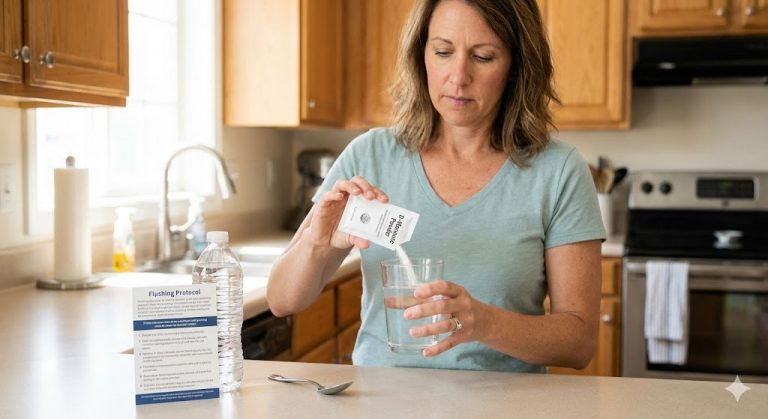
To make this work 20% better, stack your GR-1/RC-14 Probiotic with D-Mannose. Do not mix them in the same swallow, but use them in the same daily protocol.
The D-Mannose acts as the “flush,” binding to any E. coli that make it into the bladder. The Probiotic acts as the “wall,” preventing new bacteria from getting in. This “Flush and Seal” strategy attacks the infection cycle from both ends. For an added layer, consume Prebiotic Fiber (like Acacia) to feed the good bacteria you are planting.
Safety & Precautions
1. The “Bloat” Phase
Introducing 5-10 billion new bacteria can cause temporary gas or bloating in the first week. This is normal fermentation.
Safety Note: Do not quit. It typically resolves in 5 days.
2. Immune Compromise
If you are on immunosuppressants or chemotherapy, live bacteria can theoretically cause an infection in the blood.
Caution: Stick to D-Mannose until your white blood cell count recovers.
3. Histamine Intolerance
Some Lactobacillus strains produce histamine. If you get hives or headaches from fermented foods, look for “Histamine-Free” strains (like Bifidobacterium).
Heads Up: Monitor for itching or flushing.
4. Shelf Stability
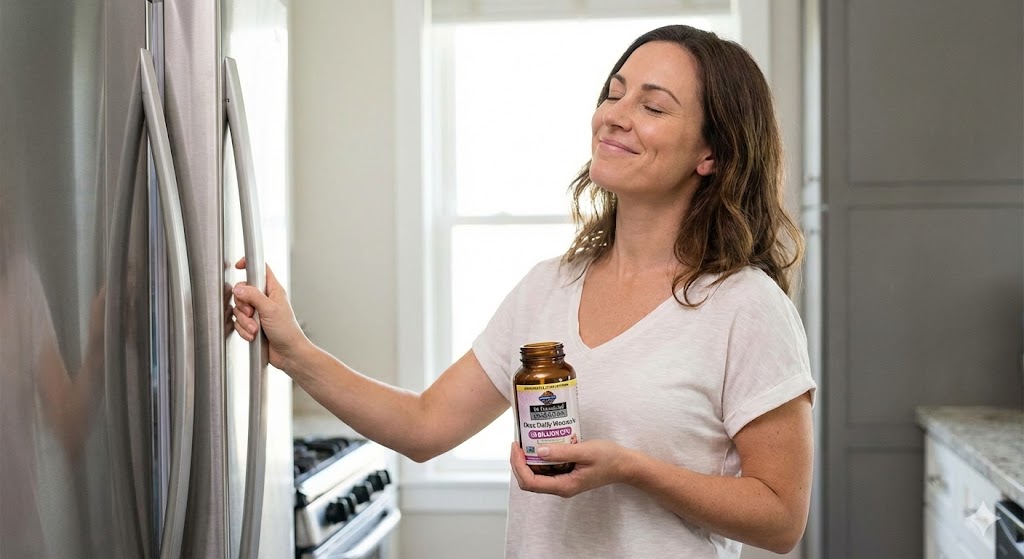
GR-1 and RC-14 are fragile. If the bottle sat in a hot warehouse, they are dead.
Doctor’s Note: Buy from retailers that ship with cold packs or keep them in the fridge.
5. Not a Cure
Probiotics are prevention. If you have a fever, back pain, or blood in urine, you have an active kidney risk.
Warning: Go to urgent care. Probiotics cannot kill an established kidney infection.
5 Common Myths vs. Facts
Myth 1: More CFUs are better.
Fact: 50 Billion generic bacteria are useless if they don’t stick. 1 Billion of the right strain (GR-1) is clinically superior.
Myth 2: Cranberry juice is enough.
Fact: Juice is high in sugar, which can feed Candida (yeast). You need the concentrated extract (PACs) or D-Mannose, not the juice.
Myth 3: Probiotics work instantly.
Fact: It takes weeks to colonize the vaginal tract. This is a long-term defense strategy, not an aspirin.
Myth 4: Men should take the same ones.
Fact: Men do not have a vaginal microbiome to colonize. Men benefit more from prostate-focused antioxidants than “Fem” probiotics.
Myth 5: All fermented foods work.
Fact: Kimchi and Sauerkraut are great for the gut, but they do not contain the specific urogenital strains needed to block UTIs.
The Bottom Line
You cannot defend a fortress with the wrong soldiers.
Based on the research, I believe that for the Skeptical Optimizer, the L. rhamnosus GR-1 & L. reuteri RC-14 combination is the only scientifically validated choice for preventing recurrent UTIs. Generic probiotics are simply shooting in the dark. You need the specific strains that build the hydrogen peroxide shield.
While drinking cranberry juice is a popular home remedy, the practical gap is the sugar content that often fuels yeast infections. For a clinical-strength result that actually secures the perimeter, I recommend pivoting to a Refrigerated GR-1/RC-14 Probiotic. Stack it with D-Mannose to keep the bladder clear while you rebuild your biological wall.
Get Your FREE Ultimate Vitamin Guide!
Join the VitaminProGuide community to receive science-backed supplement reviews, nutritional insights, and absorption tips, delivered straight to your inbox.