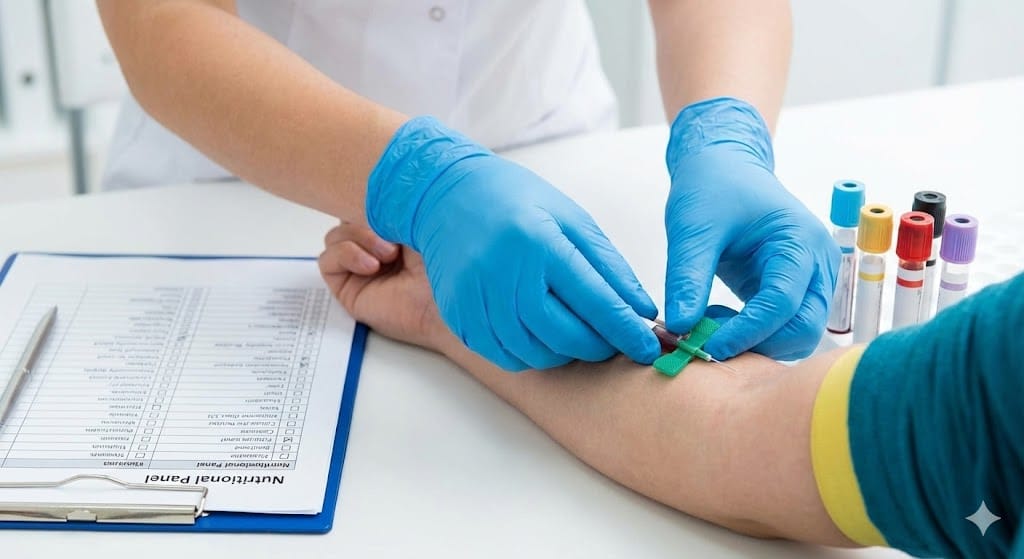
- Safety: Blood tests are a safe and standard medical procedure performed by healthcare professionals.
- Effectiveness: This is the only definitive method to identify specific nutrient shortfalls in your body.
- Key Benefit: Provides a data-driven baseline to create a targeted and effective supplementation plan.
You feel perpetually exhausted despite getting enough sleep and eating what you think is a balanced diet. This common frustration leads many to wonder how to get tested for vitamin and mineral deficiency to find real answers. It is the first step moving from guessing to knowing what your body needs.
I dug into the clinical guidelines and found that relying on symptoms alone is a recipe for confusion. Fatigue can be caused by anemia low vitamin D or a thyroid issue. Without concrete data you are just throwing darts in the dark.
Getting a proper diagnosis changes everything. My research shows that targeted supplementation based on lab results is vastly more effective than taking a generic multivitamin. You stop wasting money on things you do not need and focus on what will actually make you feel better.
Let us look at the practical steps to get the right tests. Here is the evidence-based approach to uncover your nutritional status.
What the Research Says About Nutrient Status Testing
My investigation into clinical pathology reveals that there is no single test that covers every nutrient. Different vitamins and minerals are measured in different ways. For example, the National Institutes of Health states that the serum 25-hydroxyvitamin D test is the best indicator of vitamin D status. Other nutrients might require measuring levels within red blood cells for a more accurate long-term picture.
I found that standard blood panels ordered during an annual physical often skip key micronutrients. A basic metabolic panel (BMP) checks electrolytes and blood sugar but does not include things like B12, magnesium, or zinc. You have to specifically request these additional panels to get a complete picture.
Also research indicates that “normal” ranges can be misleading. A result that falls at the very bottom of the reference range might still leave you symptomatic. True optimization often requires aiming for the middle to upper end of the healthy spectrum.
| Feature | Clinical Blood Testing | At-Home Hair Analysis |
|---|---|---|
| Accuracy | Gold Standard, Highly Accurate | Controversial, Can be Misleading |
| Doctor Involvement | Required for ordering & interpreting | Not usually involved |
| Actionable Data | Provides direct blood levels | Shows excretion, not body stores |
Effective Ways to Obtain Your Nutritional Data
1. Schedule a Visit with Your Primary Care Physician
This is the most traditional and reliable route. Be prepared to articulate your symptoms clearly and explain why you suspect a deficiency. Request a comprehensive panel that includes Vitamin D, B12, folate, iron (ferritin), and magnesium at a minimum.
2. Use Direct-to-Consumer Lab Services
Companies like Quest Diagnostics and LabCorp now allow you to order your own tests online without a doctor’s visit. You select the panel you want pay out-of-pocket and go to a local lab for the blood draw. I found this is a great option for those who want control over their health data.
3. Explore At-Home Blood Test Kits
Several companies offer kits where you collect a small blood sample via finger prick at home and mail it to a certified lab. These are convenient but may offer a more limited selection of tests compared to a full venous blood draw. It is a good starting point for basic markers.
4. Consult a Functional Medicine Doctor
These practitioners often run much more extensive nutritional panels than conventional doctors. They look for optimal ranges rather than just disease states. Expect a deeper dive into micronutrients, amino acids, and antioxidants.
5. Check Your Insurance Coverage
Before booking any tests call your insurance provider to see what is covered. Some diagnostic tests may require specific diagnostic codes from your doctor to be reimbursable. Knowing this upfront can save you a significant amount of money.
6. Prepare Correctly for the Blood Draw
Some tests require fasting for 8-12 hours beforehand for accurate results. Others like iron panels are best drawn in the morning when levels are highest. Ask the lab or your doctor for specific instructions to ensure your data is valid.
7. Keep Personal Records of Your Results
Do not just look at the results once and file them away. Keep a running spreadsheet to track changes over time especially after you start a supplementation protocol. This allows you to see what is working and make necessary adjustments.
How to Get the Best Results
The timing of your blood draw can significantly impact the accuracy of your results for certain nutrients. For instance I found that iron levels are typically highest in the morning making an a.m. appointment ideal for an iron panel. Hormonal tests also have specific timing requirements relative to a woman’s cycle.
There is no “dosage” for getting tested other than the frequency. For most people getting a comprehensive panel once a year is sufficient to monitor baseline health. However if you are actively treating a deficiency re-testing every 3 to 6 months is necessary to track your progress and adjust your protocol.
Always consult with your healthcare provider to determine the best re-testing schedule for your specific situation. They will consider the severity of your deficiency and the type of supplement you are taking. Consistency is key to understanding your body’s trends.
Safety & Precautions
1. Interpret Results with a Professional
Never try to self-diagnose based on a lab report alone. A number that looks high or low could be normal for your specific situation. Always review your results with a doctor who understands your full health history.
Safety Note: Misinterpreting labs can lead to dangerous self-treatment protocols.
2. Be Cautious with High-Dose Biotin
If you take supplements containing high doses of biotin (often found in hair, skin, and nail formulas) stop taking them at least 72 hours before your blood test. Biotin can interfere with certain lab assays leading to falsely high or low results for thyroid and heart tests.
Safety Note: Inaccurate tests could lead to misdiagnosis of serious conditions.
3. Stay Hydrated Before the Draw
Unless you are told not to drink water being well-hydrated makes it easier for the phlebotomist to find a vein. This reduces the chance of multiple needle sticks and makes the process smoother. Drink plenty of plain water the morning of your test.
Safety Note: Dehydration can make veins collapse and be harder to access.
4. Inform the Lab of All Supplements
Tell your doctor and the lab technician about every vitamin, mineral, and herbal supplement you are taking. Some supplements can directly affect the levels of other nutrients in your blood. Full disclosure is essential for accurate interpretation.
Safety Note: Hidden supplements can confuse your doctor and skew results.
5. Watch for Signs of Infection at Draw Site
While rare infections can occur at the site where the needle was inserted. Keep the bandage on for a few hours and watch for redness, warmth, or increasing pain. If you notice these signs contact your doctor.
Safety Note: Proper aftercare prevents minor complications.
5 Common Myths vs Facts
Myth 1: A standard physical always checks for vitamins.
Fact: Routine blood work rarely includes comprehensive micronutrient panels unless you specifically ask for them.
Myth 2: If you eat healthy you cannot be deficient.
Fact: Soil depletion, poor absorption, medications, and chronic stress can lead to deficiencies even with a “perfect” diet.
Myth 3: Hair analysis is just as good as blood tests.
Fact: Hair analysis shows what your body is excreting over time not circulating blood levels which is the clinical standard.
Myth 4: You only need to get tested once.
Fact: Nutrient levels fluctuate so regular re-testing is necessary to monitor your status and the effectiveness of any supplements.
Myth 5: Any doctor can interpret nutritional labs perfectly.
Fact: Many conventional doctors receive minimal training in nutrition. A functional medicine doctor or registered dietitian may offer more nuanced insights.
The Bottom Line
Stop guessing with your health and get the data you need to feel your best.
Based on the research I believe that learning how to get tested for vitamin and mineral deficiency is the single most important step you can take for your long-term wellness. My take is that relying on generalized advice is inefficient. A personalized approach based on your unique bloodwork is the only way to get clinical-strength results.
The next logical step is to call your doctor and request a comprehensive nutritional panel to establish your baseline. Knowledge is power.